The Cost of Sitting Too Long: Japan and North America’s Different Attitudes Toward Health
Let’s be honest—modern people’s most common “occupational disease” isn’t a cold, nor is it nearsightedness. It’s sitting too long.
Whether you’re an office worker, a remote employee, a student, or a freelancer—if you spend more than 6 hours a day glued to a chair, you’re already on the “long-sitting highway.”
What’s interesting is how differently the East and West view this issue.
In Japan, people often treat “endurance” as the way to cope.
In North America, however, people prefer to “change the environment and find solutions.”
Japan: Treating Long Sitting as a Part of Life
Japan is the perfect example of a “long-sitting culture.”
1. Office life = training your ‘sitting skills’
In Japan, long working hours are the norm.
Many people enter the office at 9 a.m. and don’t leave until 9 p.m. or later.
Overtime is common, and sitting for long hours is seen as unavoidable.
In fact, being able to “sit through it” is considered part of professional discipline.
2. The subway napping culture
You may have heard of the “Japanese subway sleepers.”
Whether it’s office workers or students, almost everyone can fall asleep in seconds on the train.
But here’s the catch: those little naps don’t fix the damage of sitting too long.
Back pain, stiff shoulders, poor circulation—these are still common invisible struggles.
3. The body’s silent SOS
More and more young people in Japan are experiencing swelling in their legs, herniated discs, and neck pain.
Traditional sitting habits like seiza (kneeling) also put extra stress on the knees and back.
Yet, most people won’t actively improve their situation. Instead, they “endure it” and maybe book a massage on the weekend.
North America: Using Tools and Habits to Fight Sitting
North Americans, on the other hand, take a much more practical approach. For them, sitting too long isn’t just uncomfortable—it’s a real health hazard.
1. Standing desks are the new normal
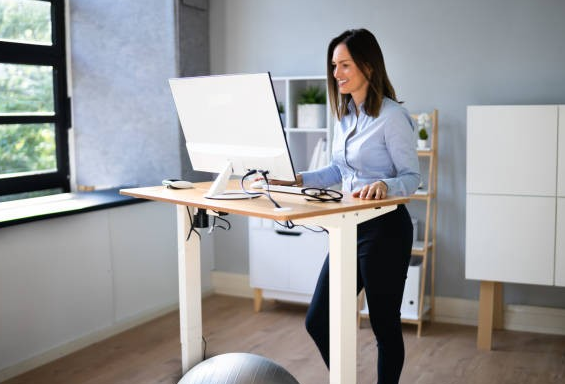
In the U.S. and Canada, “standing desks” have become an office staple.
People switch between sitting and standing to reduce back strain.
The logic is simple: if sitting feels bad, just change the way you work.
2. The gym as a post-work ritual
Going to the gym is as common as going grocery shopping.
After a day of sitting, people lift weights, run, or do yoga to make up for it.
Some companies even provide gym memberships or put workout gear in the office.
3. The love for ergonomic cushions
Besides desks and chairs, ergonomic seat cushions are hugely popular.
Donut cushions, lumbar supports, and footrests are almost everywhere.
North Americans believe: with the right tools, you can minimize the side effects of sitting.
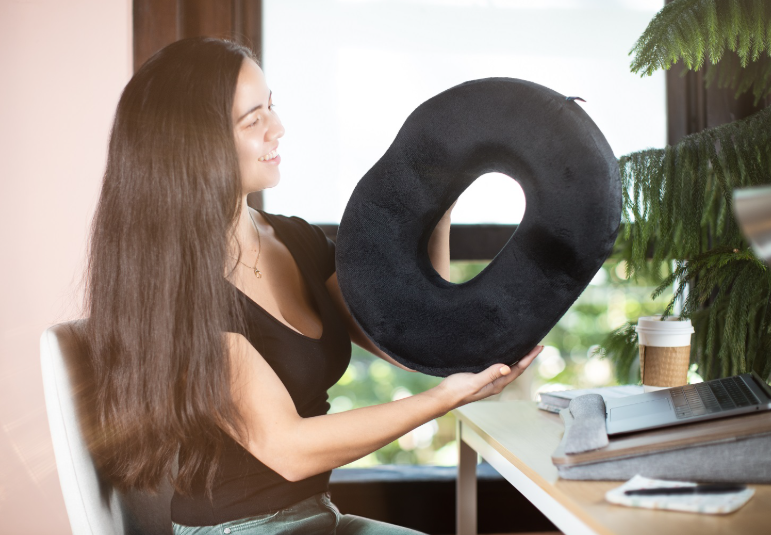
For example, the bamboo charcoal donut pillow is a favorite. Its hollow center relieves tailbone pressure, while bamboo charcoal material is breathable and naturally anti-bacterial—perfect for people who sit for hours.
The Common Problems of Sitting Too Long
No matter if you “endure” like the Japanese or “equip yourself” like North Americans, sitting too long always brings the same issues:
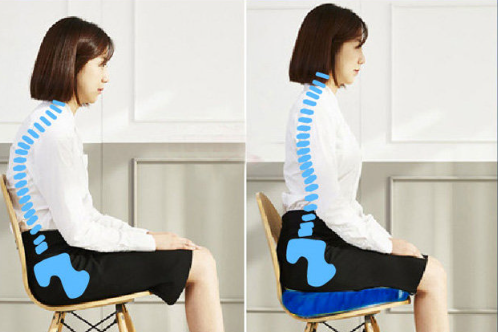
Increased spinal pressure: Sitting compresses spinal discs more than standing.
Poor circulation: Blood flow slows down, causing swelling or even varicose veins.
Buttocks discomfort: Prolonged sitting strains glute muscles and irritates the sciatic nerve.
Stiff shoulders and neck: Forward head posture leads to stiffness and headaches.
Sounds scary, right? But don’t panic. There are ways to sit smarter—and a donut cushion is one of the easiest fixes.
How to use a donut pillow
Some people think you just throw it on a chair and sit. Not quite! Here are a few tips:
1. Place it in the center of the chair
Make sure the hollow part is right under your tailbone. That way, pressure is evenly distributed.
2. Don’t lean too far back
Sit so your hips rest in the middle of the cushion. If you slide all the way back into the chair, the support won’t work as well.
3. Keep a 90° posture
Feet flat on the ground, knees at 90°. This maximizes the cushion’s ergonomic benefits.
4. Use it in multiple settings
At the office: Relieve pressure during long work hours.
In the car: Reduce discomfort on long drives.
At home: Protect your hips and back while binge-watching.
So remember: a donut cushion isn’t just “another pillow”—it’s a real health tool for long-sitting lifestyles.
Japan vs. North America: Who Needs It More?
Honestly? Both.
Japanese workers: Since they’re used to enduring pain, they especially need donut cushions to prevent problems before they worsen. Why wait until back pain hits?
North Americans: They’re already proactive about health and love ergonomic tools, so a bamboo charcoal donut cushion fits perfectly into their lifestyle.
In short, whether you’re a “grit-your-teeth” type or a “fix-it-now” type, this cushion adapts to you.
Final Word: Your Body Shouldn’t Pay the Price for Sitting
By now, you can see it clearly:
In Japan, long sitting is “endured.”
In North America, it’s treated as a “health threat to solve.”
But either way, your body won’t compromise forever. The cost of sitting too long always comes due.
So why wait until back pain strikes? Why not prepare your own little lifesaver right now?
A bamboo charcoal donut pillow doesn’t just relieve pressure—it protects your spine and pelvis, too.
After all, health isn’t a luxury. It’s a daily necessity.
So next time you sit at your desk, in your car, or on your couch, ask yourself:
Am I draining my body—or taking care of it?
If you want the second answer, let the donut cushion help lower the cost of sitting, starting today.